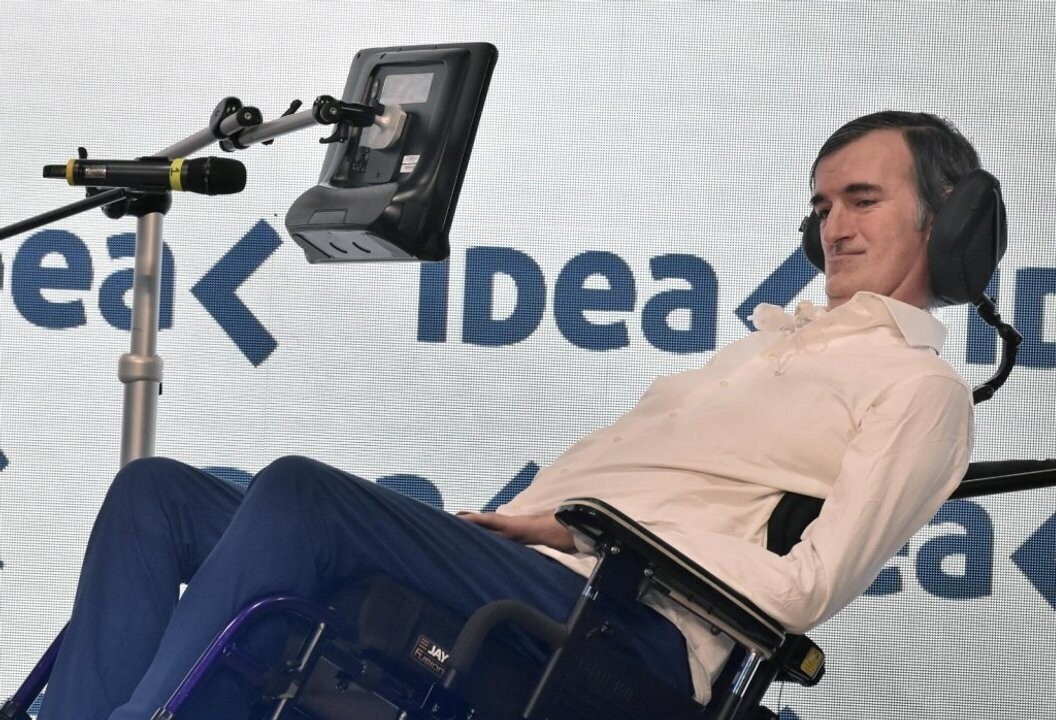
The most recent example is the rapid accession of Argentina to the so-called Board of Peace, an initiative promoted by Trump that was signed by our country before most relevant Western democracies. It does not position us better in the world; it reduces us to spectators of others' decisions. Buenos Aires, February 3 (NA) – The former PRO senator Esteban Bullrich questioned this Tuesday the alignment maintained by President Javier Milei, from the beginning of his administration, with respect to the political agenda of the United States and described the leader of that country, Donald Trump, as an 'improviser.' The fact that the former Macri official used as an example was Argentina's entry into the Board of Peace, the body created by the American president himself and presented to the world as an 'alternative' entity to work in war conflict zones, as the United Nations does, with a main focus on the Gaza Strip. 'The decision of the Argentine president to follow Donald Trump in practically all gestures and definitions of foreign policy clearly exposes this problem. Because when a country stops thinking for itself, it slowly begins to disappear from the map of relevant decisions. Argentina needs a foreign policy that thinks, that discusses, that discriminates, and that chooses. And that is a risk that we should not be willing to run,' he concluded. This is not a minor detail nor a simple diplomatic gesture: it is a strong political signal that expresses a will for unconditional alignment without prior strategic debate,' he stated in a recent analysis published in the newspaper La Nación. In the same vein, he affirmed that said alignment 'is particularly problematic' when the central axis is the figure of Trump, a leader who 'does not seek to illuminate the international stage with prudent, predictable decisions oriented to the common good.' Bullrich, even, detailed that the management of the US president 'is characterized by improvisation, the extreme personalization of power, and a transactional logic' in which he 'dangerously confuses,' and almost deliberately, private interests with public policies. Also, he recalled that Trump increased his personal 'wealth by more than a billion dollars while in power' and that this fact is not only 'an ethical scandal,' but also 'a warning sign' about how he performs his public function and what the true role of the State is. Finally, he assured that he does not deny what Milei 'owes' his American counterpart because thanks to this he achieved 'part of his international legitimacy and his electoral victory': 'That support was explicit, public, and strategic,' he added. 'Following a leader who confuses power with business, force with authority, and whim with strategy does not strengthen us; it weakens us.'